
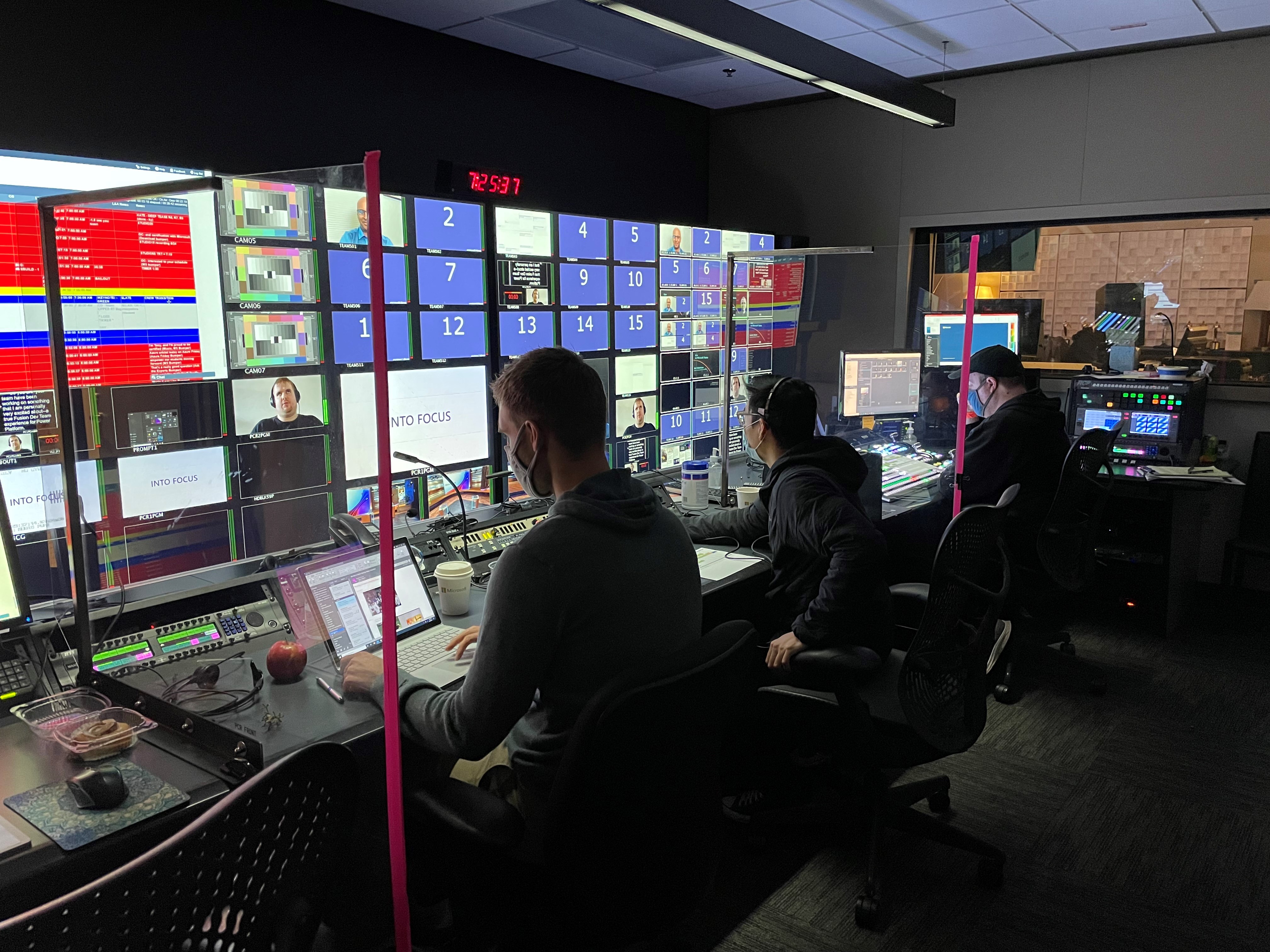
Most teams approach live vs. pre-recorded as a binary decision.
It’s not.
The strongest productions are usually a blend of the two. The real question isn’t whether to go live, but where live genuinely adds value and where it quietly introduces unnecessary risk.
There’s a common assumption that live content is automatically more engaging or authentic. In many cases, that’s true. But in corporate environments, live can just as easily introduce risk without improving the audience experience.
As one Mighty producer put it, even major live formats like sports rely heavily on pre-produced elements. Interviews, analysis segments, and feature packages are often recorded in advance, sometimes only minutes before airing, to maintain narrative control and production quality while still preserving the feeling of immediacy.
Pre-taped as live is not about removing authenticity. It’s about controlling variables that do not need to be left to chance.
It allows teams to:
In high-pressure environments, it’s rarely the plan that breaks down. It’s the variables no one accounted for.
This becomes especially important in moments like product launches, where precision matters more than spontaneity.
There is a real psychological component to live content. When something unfolds in real time, the audience feels it. That energy is difficult to replicate.
Live works best when:
In those moments, live is not just a delivery format. It becomes part of the experience itself.
The best productions are rarely fully live or fully pre-recorded.
They are intentionally designed: live where timing and interaction matter most, pre-taped where precision and message control are critical, and blended together in a way the audience never questions.
At the end of the day, the audience is not evaluating your production format. They are reacting to how confidently the experience holds together.



